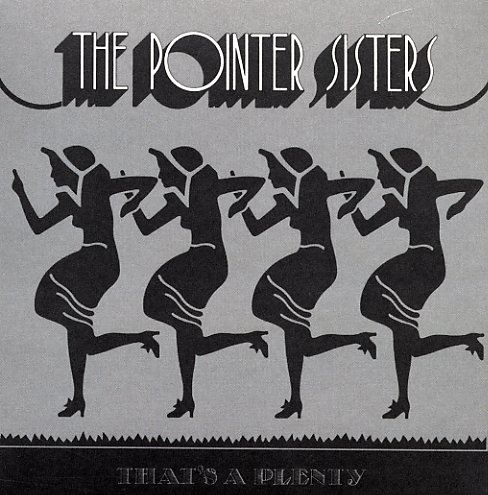
The Pointer Sisters - That's a Plenty
The Pointer Sisters - That's a Plenty
by Christian John Wikane
“Hot damn–them girls is black!”
That was the response from one astounded audience member when Ruth, June, Anita, and Bonnie Pointer took the 1974 Grand Ole Opry stage to sing “Fairytale,” then a Top 40 country hit.
Right, country, pedal steel, fiddle ‘n all. You see, ten years before the Pointer Sisters dominated the airwaves with their Richard Perry-produced Break Out, they were confounding industry executives and delighting audiences with a remarkable blend of scat singing, bluesy wailing, and funk fabulousness on a set of albums they recorded for Blue Thumb Records. In the process, they set a precedent that’s yet to be equaled by any another female vocal group (don’t even think of putting the Puppini Sisters in the same class). They spun 180-degrees between musical epochs in thrift store threads and effortlessly navigated through different styles without losing their core soul and gospel-rooted sound.
That’s a Plenty (1974), which includes “Fairytale,” is the apex of the remarkable first phase of their three-decade career, a period since overshadowed by the ubiquity of their more commercially successful late-‘70s to mid-‘80s string of pop and R&B hits. Singles like “I’m So Excited” and “Jump (For My Love)” are usually the default associations that listeners make about the Pointers Sisters. I propose that That’s a Plenty, though not entirely obscure (it earned a gold record), deserves a moment or two to be reconsidered as an integral, defining moment of The Pointer Sisters’ career.
When That’s A Plenty hit shelves, introducing the group’s silhouetted flapper cover logo, The Pointer Sisters were still celebrating the impressive success of their self-titled debut and monster hit single, Allen Toussaint’s “Yes We Can Can.” The Pointer Sisters (1973) set the blueprint for That’s a Plenty’s motley mix: their canny ability to traverse a wide terrain of influences, refined by David Rubinson (who later produced the groundbreaking funk-rock of Labelle’s Chameleon). Rubinson helmed the production and assembled a dream roll call of session musicians and players, including Bonnie Raitt and Herbie Hancock. He steered the Sisters through nine songs that ranged from the swaggering blues of “Grinning In Your Face” to the exuberant jazz of “Little Pony” to the tongue-in-cheek nostalgia of the album’s opening “Bangin’ on the Pipes”/”Steam Heat” medley.
But a scatting excursion around Dizzy Gillespie’s “Salt Peanuts” is what sets the album’s genius in plaster. The deftness of each Sister’s rhythm and timing could blow 95% of any living popular female vocalist off the stage. Gaylord Birch’s frantic drumming sets the tune off and the Pointer Sisters pack an average twenty words into two-second phrases. The incredible words-per-second count never ceases to astound, especially if the lyric-printed sleeve is at your disposal. Even more impressive is that the Pointer Sisters replicated this performance on Live at the Opera House (1974), an album well worth a visit to hip-oselect.com. (Note: they were the first pop act to perform at the famed San Francisco venue.)
Both “Shaky Flat Blues” and “Fairytale” showcased how the Sisters’ natural songwriting affinity translated to different musical environs. The former matched the Sister’s tale about the woes of city living with a cool bass-drum-piano-guitar arrangement and slinky solos by Harry “Sweets” Edison on trumpet and Britt Woodman on trombone.
But the distress of smog and sirens gave way to the tear-in-my-beer sentimentality of “Fairytale.” Written by Anita and Bonnie, and sung with a trace of twang, “Fairytale” is as authentic a country ditty as anything Dolly Parton and Porter Wagoner recorded at the time. Rubinson even brought the quartet down to Quadraphonic Studios in Nashville to record the song, giving “Fairytale” an even more direct relationship to its country DNA. Appropriately, they were awarded a Best Country Performance by Duo or Group Grammy for the song.
In its remaining nineteen minutes, That’s a Plenty finds Bonnie Pointer laying down a riveting solo performance on “Black Coffee” that would make Peggy Lee proud while all four sisters vamp it up on the album’s breathless tribute to Dixieland, “That’s a Plenty/Surfeit U.S.A.” (Ruth is especially charismatic here in mastering vocal guises underneath the frenetic arrangement.) Closing the album is an eight-minute explosion of shekere, talking drum, and congas on Gamble & Huff’s “Love in Them There Hills.” The liberation of sexual mores only implied in the lyrics came alive in the underground gay clubs that embraced the song. Hot damn—this was the same Pointer Sisters who were regularly featured on Sesame Street and Carol Burnett.
Though the Pointer Sisters ultimately felt restrained by the outlandish Carmen Miranda-like costumes and Andrew Sisters comparisons, and turned to a more mainstream R&B sound by 1977’s Having a Party, That’s a Plenty provides compelling hindsight: They were true innovators and this album documents the blazing embers they left behind to get there. Three and a half decades later, That’s a Plenty remains a gleeful thrill ride.
Christian John Wikane is a contributing editor for PopMatters. He also writes for SoulTracks and David Nathan’s Soulmusic.com. He resides in Hell’s Kitchen, NYC.
by Christian John Wikane
“Hot damn–them girls is black!”
That was the response from one astounded audience member when Ruth, June, Anita, and Bonnie Pointer took the 1974 Grand Ole Opry stage to sing “Fairytale,” then a Top 40 country hit.
Right, country, pedal steel, fiddle ‘n all. You see, ten years before the Pointer Sisters dominated the airwaves with their Richard Perry-produced Break Out, they were confounding industry executives and delighting audiences with a remarkable blend of scat singing, bluesy wailing, and funk fabulousness on a set of albums they recorded for Blue Thumb Records. In the process, they set a precedent that’s yet to be equaled by any another female vocal group (don’t even think of putting the Puppini Sisters in the same class). They spun 180-degrees between musical epochs in thrift store threads and effortlessly navigated through different styles without losing their core soul and gospel-rooted sound.
That’s a Plenty (1974), which includes “Fairytale,” is the apex of the remarkable first phase of their three-decade career, a period since overshadowed by the ubiquity of their more commercially successful late-‘70s to mid-‘80s string of pop and R&B hits. Singles like “I’m So Excited” and “Jump (For My Love)” are usually the default associations that listeners make about the Pointers Sisters. I propose that That’s a Plenty, though not entirely obscure (it earned a gold record), deserves a moment or two to be reconsidered as an integral, defining moment of The Pointer Sisters’ career.
When That’s A Plenty hit shelves, introducing the group’s silhouetted flapper cover logo, The Pointer Sisters were still celebrating the impressive success of their self-titled debut and monster hit single, Allen Toussaint’s “Yes We Can Can.” The Pointer Sisters (1973) set the blueprint for That’s a Plenty’s motley mix: their canny ability to traverse a wide terrain of influences, refined by David Rubinson (who later produced the groundbreaking funk-rock of Labelle’s Chameleon). Rubinson helmed the production and assembled a dream roll call of session musicians and players, including Bonnie Raitt and Herbie Hancock. He steered the Sisters through nine songs that ranged from the swaggering blues of “Grinning In Your Face” to the exuberant jazz of “Little Pony” to the tongue-in-cheek nostalgia of the album’s opening “Bangin’ on the Pipes”/”Steam Heat” medley.
But a scatting excursion around Dizzy Gillespie’s “Salt Peanuts” is what sets the album’s genius in plaster. The deftness of each Sister’s rhythm and timing could blow 95% of any living popular female vocalist off the stage. Gaylord Birch’s frantic drumming sets the tune off and the Pointer Sisters pack an average twenty words into two-second phrases. The incredible words-per-second count never ceases to astound, especially if the lyric-printed sleeve is at your disposal. Even more impressive is that the Pointer Sisters replicated this performance on Live at the Opera House (1974), an album well worth a visit to hip-oselect.com. (Note: they were the first pop act to perform at the famed San Francisco venue.)
Both “Shaky Flat Blues” and “Fairytale” showcased how the Sisters’ natural songwriting affinity translated to different musical environs. The former matched the Sister’s tale about the woes of city living with a cool bass-drum-piano-guitar arrangement and slinky solos by Harry “Sweets” Edison on trumpet and Britt Woodman on trombone.
But the distress of smog and sirens gave way to the tear-in-my-beer sentimentality of “Fairytale.” Written by Anita and Bonnie, and sung with a trace of twang, “Fairytale” is as authentic a country ditty as anything Dolly Parton and Porter Wagoner recorded at the time. Rubinson even brought the quartet down to Quadraphonic Studios in Nashville to record the song, giving “Fairytale” an even more direct relationship to its country DNA. Appropriately, they were awarded a Best Country Performance by Duo or Group Grammy for the song.
In its remaining nineteen minutes, That’s a Plenty finds Bonnie Pointer laying down a riveting solo performance on “Black Coffee” that would make Peggy Lee proud while all four sisters vamp it up on the album’s breathless tribute to Dixieland, “That’s a Plenty/Surfeit U.S.A.” (Ruth is especially charismatic here in mastering vocal guises underneath the frenetic arrangement.) Closing the album is an eight-minute explosion of shekere, talking drum, and congas on Gamble & Huff’s “Love in Them There Hills.” The liberation of sexual mores only implied in the lyrics came alive in the underground gay clubs that embraced the song. Hot damn—this was the same Pointer Sisters who were regularly featured on Sesame Street and Carol Burnett.
Though the Pointer Sisters ultimately felt restrained by the outlandish Carmen Miranda-like costumes and Andrew Sisters comparisons, and turned to a more mainstream R&B sound by 1977’s Having a Party, That’s a Plenty provides compelling hindsight: They were true innovators and this album documents the blazing embers they left behind to get there. Three and a half decades later, That’s a Plenty remains a gleeful thrill ride.
Christian John Wikane is a contributing editor for PopMatters. He also writes for SoulTracks and David Nathan’s Soulmusic.com. He resides in Hell’s Kitchen, NYC.
Labels: Christian John Wikane
posted by kiss out the jams at
11:05 PM
2 Comments